
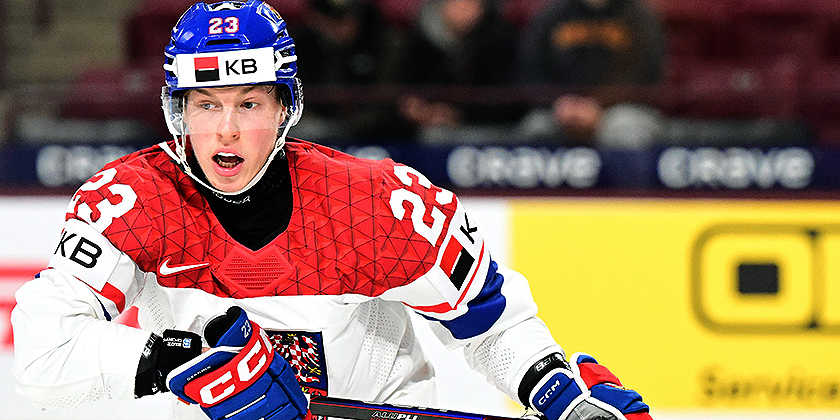
Tomas Galvas (D, L, 5’10”, 173, Bili Tygri Liberec, 02/11/2006) Tomas Galvas is a 5’10’, 173-pound left-shot defenseman whose production against professional competition and international play demands serious NHL consideration, but whose size and defensive reliability will ultimately determine his projection. In 32 games in the top Czech league (8-16-24, +16) along with elite production at the World Juniors (9 points in 7 games), Galvas has clearly proven he can impact games offensively against men, which is a major positive and separates him from typical junior-only producers. His offensive toolkit is high-end as he generates 1.03 scoring chances per game with a strong 15% conversion rate, moves pucks at an elite level (92% pass completion, 2.3 pre-shot passes/game), and consistently drives transition with his skating, vision and hard flat passes, which aligns with prior Neutral Zone reports highlighting his agility, deception, and ability to create space under pressure. He plays with confidence and poise, and his ability to activate offensively and distribute through layers makes him a legitimate power play driver. However, the concerns remain consistent and are amplified by NHL standards: at 5’10’, 173 pounds, he is undersized relative to NHL players, and while his skating allows him to defend with positioning, his 50% puck battle win rate and low physical engagement (0.33 hits/game) show clear limitations in handling heavier, interior play at higher levels. His tendency to over-activate offensively and get caught up ice continues to show up in his game, and while his offensive instincts are a strength, they can come at the expense of defensive structure as he enjoys playing a high-risk game. Additionally, his defensive zone play remains average, relying more on skating recovery than physical stops in the corner or net-front control. That said, his production at the pro level, combined with elite puck movement and offensive IQ, gives him a legitimate NHL pathway. I believe Galvas can become an NHL player, but not within a 2-4 year window. He projects as a longer-term development defenseman who could evolve into a power play specialist or second-unit offensive defenseman if he can improve his consistency while adding strength and power to handle NHL pace and physicality.
Photo credit: Dan Hickling/Hickling Images