
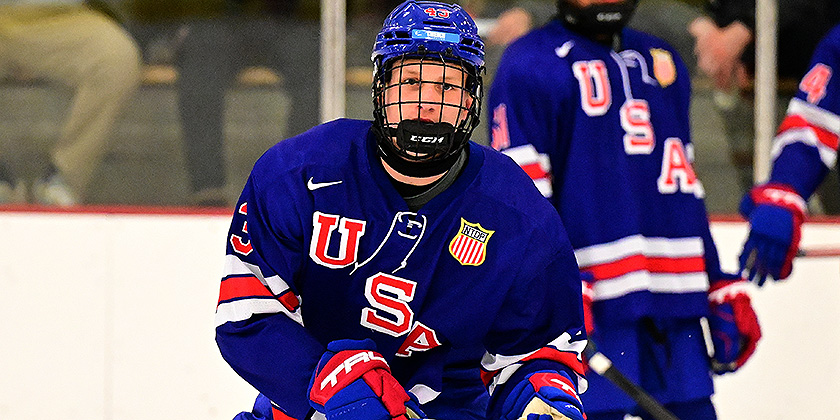
USA Hockey had announced a new Development League last year in its goals to provide better advancement and development opportunities for the top prospects in the United States. The league will consist of about 30 organizations offering 15U and 17U programs who will compete against one another and have a year end playoff that is not associated with USA Hockey Tier 1 Nationals. Earlier this week USA Hockey announced the teams they were inviting into the league and announced it will commence this upcoming season.
It would be hard to argue with the teams that were initially invited as they are all nationally recognized programs with a proven track record in player development. Sure there are other worthy programs who were not invited but there is a fair argument that adding more teams could water down the overall product.
The league has drawn both criticism and praise in its initial release and after talking with some USA Hockey officials, coaches of teams invited, coaches of teams not invited and agents who handle many of the top players in the US to gain further understanding and analyze the multiple perspectives around this topic. We also come at this with a unique perspective being the only entity in hockey that has scouted every AAA league from 14 to 18 years olds on an annual basis throughout the United Statees and Canada for over a decade.
First off, nobody knows how this will play out and only time will tell so we will not jump to any conclusions or make grand projections until we see the product next season. The goal here is to analyze the objective of the league and the potential outcomes of the league; where is there opportunity for success and where are there potential shortcomings.
The Objective
Credit to USA Hockey, an organization who hasn’t had the best track record in the transparency department, they have been straight forward with their objectives of this initiative as stated on their website:
- The DL would provide an additional level of hockey within USA Hockey’s player development pathway to ensure that players receive optimal training and competition, ultimately strengthening the overall player pool for junior and college hockey.
- The DL is intended to enhance the national development pathway by preparing players to successfully transition into Tier I (United States Hockey League) and Tier II (North American Hockey League) junior hockey. By focusing on advanced training and competition, the DL aims to elevate the overall quality and readiness of athletes entering the junior ranks.
One of the coaches from an organization that was not selected said to us, “they are solving a problem that doesn’t exist.” The problem that USA hockey is identifying is the “quality and readiness of athletes entering junior ranks.” This can be looked at from multiple points of view and without going into every nuance of that debate – the historical data would suggest that there is a strong correlation between success in the NAHL and USHL and time in the league. Its is a difficult transition for rookie players given the quality of hockey and the style of play in both leagues and that shows up the most with the 16 year-old cohort (NTDP and USHL Tenders). It also is prevalent with 17 year olds and even 18 year old rookies as well just not as glaring. If USA Hockey is trying to improve the “readiness” of Midget AAA players transitioning into US junior hockey – that objective has merit and addressing it would be impactful for junior hockey in the United States.
USA Hockey appears to recognize in this instance the changing landscape in junior and collegiate hockey and is actively trying to take steps to improve their product (the players) and their offerings (the Tier 1 Midget programs, NAHL and USHL).
To breakdown the potential solutions – you have to understand the current landscape and where the problems actually lie. USA Hockey has already stated that they don’t believe there is a need in other areas like Girls Hockey and Minnesota Hig School and that their target is the USA Hockey AAA model and their junior hockey assets (NAHL, USHL, NTDP).
USA Hockey’s flagship program, the National Development Program, which has had historical success in developing most of the top American prospects over the years, the likes of Jack Eichel, Jack Hughes, Patrick Kane, Auston Matthews, etc. has struggled since the 2001 birth year. That year broke a record for the most players drafted in the NHL off of a single team with 17 and a staggering 8 first round picks including first overall with Jack Hughes. Since then the highest number of first rounders they’ve had was the 2023 NHL where they had four first rounders. After that they’ve had just two first rounders in 2024, zero in 2025 and one in 2026. Last year’s NHL Draft was the most alarming where five of the top seven US born prospects were drafted out of the CHL, one from the USHL and only one from NTDP.
Now there are late birth years who go to college or play another year of juniors who are not included in those totals but the point is – the program went from developing a historical average of seven players directly drafted from NTDP into the NHL in the top two rounds to averaging just two in the previous two drafts (2025 and 2026) after the NCAA/CHL rule change.
The other reality of the NTDP is that the last two seasons they have lost their best player; in 2026 it was JP Hurlbert who went onto the WHL and became a first round NHL pick by the Detroit Red Wings. This past year the team lost Carter Meyer, a projected Top 10 NHL pick who went to Quebec in the QMJHL. That is more of a retention problem than a development problem but given that the NTDP U17 has struggled playing at the USHL level in recent years – USA Hockey would be incentivized to field a better, more junior ready team so the players have a better experience and return for the U18s in their draft year. Again, if the league is attempting to improve readiness for junior hockey than that is addressing a legitimate issue and, if successful, would have positive ramifications.
One of the reasons for the NTDP U17’s struggles has nothing to do with the program itself; it is the reality that the USHL is a very challenging league to play in and the U17s are all 16 year old rookies with no junior experience. Just a few weeks ago we were in attendnace for the 17s first two games of the year against NAHL and they didn’t scor a goal in either contest. The historical data shows, in aggregate the high school/prep school portion or players who have played against older competition pior to NTDP have been a much smaller percentage of “misses” than those out of the Midget AAA single birth-year group. This makes sense as it’s easier to project players who have experiencei n more competitive environemtns than those who are playing solely against others their age.
Like NTDP, the USHL has seen a similar decline in the NHL Draft selections, particularly at the top of the draft, as the last player to go directly out of the USHL in the Top 10 was Kyle Okoposo who went 7th overall in 2006. There is nuance there as Casey Mittelstadt went top 10 the following year but technically played a full-season in Minnesota HS and played in the fall and end of the season with Green Bay. That isn’t to say they haven’t had quality alumnus, Macklin Celebrini, Owen Power and Artyom Levshunov were all top picks and came out of the USHL but were drafted out of the NCAA; not directly from the USHL. Either way, the CHL/NCAA rule changes showed a major drop in the 2026 NHL Draft going from a quality 11 NHL Draft picks in the top two rounds in 2025 to just three in 2026; a 73% decline. If NTDP and the USHL are looking for a resurgence from the 2026 NHL Draft they are not likely to find it in the 2027 Draft. The same dynamics apply with several of the top Americans in this years draft currently on CHL rosters (Carter Myer, Noah Davidson, Shaeffer Gordon-Carroll, Levi Harper, Jamie Glance).
The current reality is that of the 50 or so players who are going to attempt to play at the highest level of junior hockey (CHL, NTDP, USHL) at 16 years old; only 3-7 of those prospects, depending on the year, are actually good enough to have significant impact. That number includes foreign born players who were tendered in the USHL. For example, the best performers at the USHL Fall Classic this year for 16-year-olds were all imports who were tendered: Dominik Bednard (Sioux City), Wilson Boumedienne (Fargo) and Zaac Charbonneau (Muskegon).
The next group of players, typically falling between 10-15 are able to have moderate impact and adapt to junior hockey in their 16 year-old year but the rest are doing their best to keep up. So when over half the NTDP U17s aren’t quite ready for juniors, it’s asking a lot for the US players not selected for that team to have immediate success in the USHL. Most teams understand that and treat that season as an adjustment to junior hockey and laying the groundwork for a successful season the following year. So again, the “readiness” angle that USA Hockey says in their objectives and their desire to “strengthen the overall player pool for junior and college hockey” is the right problem to solve for.
Some conclude that there are “unwritten” objectives here and we’ll avoid most of that because most of the comments we received on this topic were pure conjecture. With that said, there is one obvious one in this initial release that would be fair to point out.
That is the objective to decrease the number of Americans leaving Midget AAA (and the US Junior leagues) for the CHL.USA Hockey was not prepared for this exodus in 2025. Some tried to downplay the initial movement from under 95 Americans in the CHL in 2023 to over 200 in 2025 as a “shiny new toy” and that it wasn’t sustainable, but when the number of Americans in the CHL increased over 15% this past year- it became more apparent that the movement of top US talent to the CHL is here to stay. The fact USA Hockey does not mention the CHL in this release and specifically states it is trying to improve the talent pool and readiness for the USHL and NAHL makes it logical that this is an unwritten objective of the league.
So, while we can’t predict whether this league will be successful in delivering these objectives at this point, it appears USA Hockey’s objectives with this new league both address the current landscape and the actual problems it faces, in particular with the NTDP and USHL.
The Case for the DL
The Development League, assuming all programs live up to the charter, has several positive implications for US born prospects.
The most obvious is likely the commitment these programs are inherently making towards prioritizing development as opposed to playing high volume of games for higher national rankings. The standards implemented around on-ice and off-ice training, the cap on number of games overall and over the course of a weekend could have a lot of positive benefits on development but also injury prevention, burnout and quality of training.
One of the unintended flaws of the current AAA model has been the incentive structure for programs to qualify for USA Hockey Nationals. To do so teams need to play a certain amount of games in their district against other AAA teams. Given the talent disparity that exists in AAA hockey this leads to a lot of lop-sided games where nobody is getting much out of that experience. To take the very best AAA programs from around the United States to predominantly play against each other, from a strictly hockey perspective makes a lot of sense.
The next two cases for, in our view, highlight the true opportunity of this new initiative.
First, is the ability for elite level 14-year-olds to play up at the 15U level. While there aren’t many of these players in the country who will have a high impact on a 15U team as a 14 year-old, providing the opportunity for those elite level players could very well yield positive results. Having scouted the bantam age group across North America for over a decade – it’s very common for the top echelon players to get bored and develop bad habits from their either size or skill or speed advantages at that level that allow them to get away with areas of the game that won’t translate in junior hockey.
The other opportunity is the same situation but for the 17U division. Elite level 15-year-olds will have the opportunity to play at the 17U level – which will allow those prospects to gain experience against older, faster, stronger competition. This has not existed in the current AAA model at scale and it could potentially improve the readiness of this cohort for junior hockey and the NTDP.
17U does not currently exist in USA Hockey and it was one of the controversial moves of this league but, in our view, it makes a lot of sense because it’s likely to have the bulk of players being 16 year olds with some 17 year olds who aren’t quite ready for junior and maybe 1 or 2 elite level 15 year olds who are potential NTDP and top round USHL/CHL draft picks.
It will come down to execution but the league both addresses and counters some of the mis-incentives in the current system in prioritizing development over winning tournaments and practice on and off-ice against playing 6 games in a weekend. Creating a path that can accommodate the countries better AAA players and also create a unique path for the elite level prospects to play up a level at both 15U and U17 could be a positive step forward towards their stated objectives.
The Potential Shortfall
Some of the obvious downsides of creating a small league of top AAA organizations is what happens to everyone else who is not in the league. With that said, the reality is the number of high level prospects in the AAA system playing outside of those 30 organizations is already quite small today. In analyzing USHL and CHL drafts – outside of Minnesota HS and New England Prep School, the AAA model programs generate the overwhelming majority of draft picks from the top 20 ranked programs. So there isn’t a ton of change in that regard to being in the league or not being in the league; the same teams have dominated those drafts for over a decade.
With that being said, USA may not have the per-capita success rates of Finland and Sweden and doesn’t have the aggregate or top echelon as Canada, but the United States has been dominant in the undrafted free agent group as a whole and having pathways for late bloomers. This has largely been the result of the unique opportunity in the US with collegiate hockey (NCAA). With that said, it would be an unfortunate and negative byproduct if the league diminishes the rest of AAA hockey for the benefit of just 30 organizations and 60 teams. Not only does it impact other AAA programs, it could also impact the levels in general; how does 15U hockey in DL impact U14 AAA? If the best players move out of U14 AAA and into 15U DL division than it could negatively impact the bantam age group and same could be said for U16 and U18 hockey as well.
The travel and the financial commitment to play in this league is not yet determined, but it’s safe to assume it’s going to be a lot. A negative unintended consequence of course is that these kinds of initiatives price out potential top prospects for wealthy families who can afford it. One of the under-represented narratives in Minnesota and their success in player development is that regular people can still afford to play high level hockey in Minnesota where other regions are spending between $20,000 and $50,000 per year at the competitive AAA levels. The reality however is that these organizations are already traveling a considerable amount, they already play against these organizations regularly and they are already costing families an exorbitant amount so this league does not create something from that perspective that doesn’t already exist.
The biggest potential shortfall we see is USA hockey being in a very difficult position having to walk the line between the best interest of the players and the best interest of the USA Hockey leagues and member clubs. Who USA Hockey prioritizes when those two groups are in conflict will say a lot about the league and its priorities This could rear it’s head in a variety of ways but the most obvious would be as it relates to players being drafted in the CHL.
The Numbers: Play it Out
We will combine historical data and conversations with a variety of program directors who have been invited into the league to get a sense for where the movement of players will likely be. We understand that every program is an independent entity and will build their rosters how they see fit so take this is more for illustration and not an accurate prediction model.
15U and 17U both at 30 teams with approx 20 players per team is around 1,200 players total in the league.This pertains to a specific subset of USA Hockey which are players 14-17 participating in the AAA model. This does not really impact some of the other development paths throughout the country, most notably Minnesota High School and New England Prep School hockey so the scale of this, while significant, is limited.
We’ll assume two underagers for each team at 15s and one 15-year-old playing 17s. We make that assumption because it will be harder for a 15 year old to make a 17U team going up against some players who are two years their senior than a 14 year old making a 15U team.
15U: 14 year olds: 60 (10%) 15 year olds 540 (90%)
17U: 15 year olds: 30 (5%), 16 year olds: 380 (63%) 17 year olds: 190 (32%)
If we play out historical trends applied to 15-year-olds than the NTDP will take around 23 players and roughly 65% of those players will come out of AAA hockey; so that’s around 13-14 of the best players will leave for the NTDP. Then there are USHL Tenders and CHL signings which will account for nearly another 10-15 from the AAA level. Therefore, roughly 25-30 of the best prospects in the league will matriculate to junior hockey by the age of 16.
There were roughly 125 players out of U16 AAA who made the jump to either the USHL or CHL this past season but that number is nuanced in that some of those players were actually 15 year olds like Domik Bednar playing U16 for Seacoast Performance Academy Regardless, we can easily see that it’s about 5-6x the number of players leaving for juniors at 17-years-old as opposed to 16 years-old.
What this means for the league is that roughly 5% of the top rising 16-year-olds and 25-30% of the top rising 17 year olds will matriculate from this league to junior hockey. This is, by its very design, one of the main purposes of the league to foster this transition to junior hockey. At the same time, it’s also going to make the league less competitive as its top prospects leave for junior hockey. This is something every USHL and CHL GM can relate to as they see their rosters get picked over by NCAA programs. Is 5% of the top 2012s next season leaving the league and 25% of the top 2011’s leaving the league enough to materially affect the product on the ice? This is one of the reasons the 17U model makes a lot of sense because it spans three birth years to likely diminish the impact for top players leaving for junior hockey.
Final Thoughts
Time will ultimately tell the effectiveness and execution of this league to reach its stated objectives. With that said, USA Hockey at this point does seem to be realistic about the issues they face, particularly at the junior ranks, and are attempting with the league a coordinated solution across the top AAA programs in the country.
In many regards, this league may not have a material effect at all in that most of these organizations already play each other in major tournaments, they already practice three days a week, and are already the main drivers of USHL and CHL draft selections. With that said, there are also some new opportunities for elite level players to play up in age and challenge themselves against older, faster, stronger competition which could lead to an increase in player development at the top of the development ladder and improve overall junior hockey readiness.
In our view, the most fundamental question will be where USA Hockey prioritizes its focus and loyalty – is it to the betterment of the player or the betterment of their leagues and member clubs? While both can be accomplished at the same time in theory, in reality, there is an inherent conflict which is likely one of the reasons this league is being created in the first place. The CHL has long dominated the NHL Draft but most recently have successfully recruited away the bulk of top American prospects from USA Hockey sanctioned leagues and overtaken the US Junior systems in NCAA Division 1 recruiting.
It is understandable that USA Hockey would try to support and encourage American players to its member leagues (NAHL, USHL). However, if, as a matter of policy, they have language in the player contracts that prohibit, limit or diminish players opportunities outside of those leagues then this is objectively not a player-first principled league and is fundamentally not about player development.
The true way to measure success of this program won’t likely be possible until there is data from the 2029, 2030 and 2031 NHL Drafts, USHL and CHL Drafts and NCAA Division 1 roster breakdowns to compare the number of players who came up through the USA Hockey AAA model prior to DL and after the DL.
Photo Credit: Dan Hickling/Hickling Images